

When is a Restroom Considered Clean?

If you have worked in or visited a large office building, gone out for an evening dinner or spent the afternoon shopping at the mall, you've likely used a public restroom.
Do you get that anxious feeling as you latch onto the door handle and hope there are no unpleasantries or “surprises” on the other side? You know the ones; smells, dirty counters and toilets, empty dispensers, and so on. Disgusting and disappointing, right?
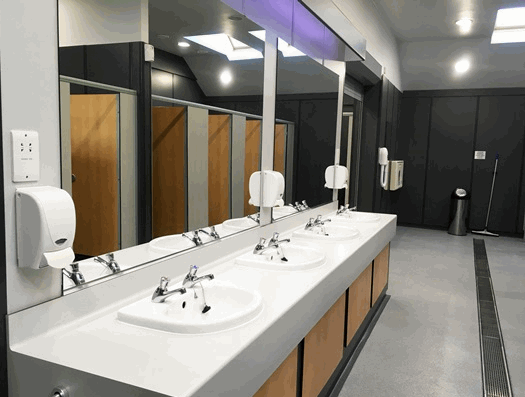
Is the restroom really clean?
Nothing is worse than a dirty restroom when sharing a public space. Not to mention the fact that poorly maintained restrooms can be a safety and health hazard for employees and visitor alike. As building service contractors, we are responsible to ensure that every person that visits the restrooms in our customer's buildings is a pleasant one.
If you find that the restrooms are unclean and the trash is overflowing from service to service, then it's time to revisit cleaning frequencies and processes. Filthy bathrooms reflect poorly on your cleaning company, so even if the property manager or building owner sets the frequency, it may be time to make a new recommendation.
Following a few simple checks will allow the restroom to remain clean between services:
- Post daily and/or weekly restroom checklists in the janitor's closet for cleaning technicians to ensure all tasks are being completed and supplies restocked.
- All dispensers are free of spots and dust and properly filled with the correct toilet paper, hand towels, hand soap, sanitary bags, toilet seat covers, etc.
- All trash has been emptied, including feminine hygiene containers. A clean liner has been installed correctly into the trash receptacle. The outside of the receptacle is free of smudges, fingerprints, and dust.
- All toilets and urinals have been disinfected and are free of all soil, spots, hard water stains, urine, feces and other body fluids – top to bottom, inside and out. Disinfect and clean diaper tables. Also, replace urinal screens as required.
- Disinfect restroom door handles, stall handles, sink handles, and dispenser touch points.
- All sinks, metal fixtures, and drinking fountains are free of all water spots, stains, soap, and any build-up around the bases.
- All counter-tops and ledges wiped and are soil and dust free.
- All mirrors are free of smudges, fingerprints, water spots, streaks, and other residue.
- All restroom floors are free of dirt, hair, paper, gum, soil build-up, urine, feces, etc.
- All floor drain covers are free of soil, lint, mop strings, dirt and other residue. At least once per week pour 16 ounces of water down the floor and/or shower drains to control odors.
- All ceiling vents are free of dust, cob webs, lint and build-up.
- All partitions, doors, walls, and ceilings are free of soil, smudges, fingerprints, water spots, and graffiti.
There is a reason that restroom cleanliness complaints rank highest among all other building complaints. They are tough to maintain, period. But by following the cleaning regiment predetermined by you and the facility manager, you can keep those complaints to a minimum.
You want all visitors to enter an odor free restroom, one that is both visually pleasing and hygienically clean, stocked with the proper amount of consumables, and disinfected to remove bacteria and other contaminates.
Copyright The Janitorial Store. All Rights Reserved
Restroom Care Training Program
Become a Certified Restroom Care Technician Cleaning Certifications are important to your clients. If you want to win out over the competition, it's time to start training your cleaning technicians with the industry's leading Certification Training Programs.
Buy the Training Program and learn how to use it to get Certified!
Visit our Store for Certification Training Programs





