

Vacuuming Walk-Off Mats -- Critical in Winter Months
Tired of trying to keep your floors and carpets clean? The proper use of walk-off mats can reduce 80% of the soil tracked into a building. Not only is it important to have walk-off mats in place, but the mats need to be vacuumed daily in order for them to be effective. And while vacuuming walk-off mats daily will help to control the amount of soil being tracked into the building, it will also keep the building looking cleaner.
Vacuuming walk-off mats is especially important during rainy months or winter-time when people track in mud, snow, salt, sand and other debris. In addition, vacuuming walk-off mats will help to reduce the number of times the carpet needs to be cleaned each year. It's important to share this information with your building owners and managers, as they are always looking for ways to save money in maintaining their buildings.
Look at the following chart. It shows that the longer the walk-off mat, the more soil and debris you're able to trap on the mat. The result is that less soil is tracked onto your floors and carpets.
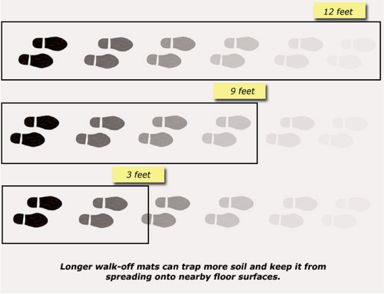
The vacuum pass chart below explains that proper maintenance of entryways is effective soil control. Ten vacuum passes over the first 10 feet inside doorways will remove most tracked in soil. Upright vacuum cleaners have strong suction and adjustable brushes for lifting the pile. Be sure to vacuum transition areas often. Hard or resilient floor surfaces that adjoin new carpet trap little soil. This means the dirt will track onto the nearest carpet.
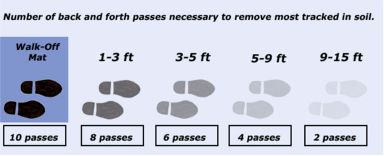
How do you know how long of a walk off mat to buy? The above picture shows how many vacuum passes you'll need, depending on the length of mat that you have in your office. For example; if your mat is 4 feet long, you'll need 6 vacuum passes to pick up all the soil on the mat. So if you only want to make 2 vacuum passes, you'll need at least a 9-foot mat!
Copyright (c) The Janitorial Store (TM)




