

5 Ways to Use LinkedIn to Find Prospects for Your Commercial Cleaning Company
It wasn't that long ago that cold calls, drop-ins, and in-person networking events were the best (and basically the only) ways to find prospects for a commercial cleaning company. While those tactics can still work, they aren't enough in the digital age.
To remain competitive today, commercial cleaning business owners should include social media in their prospecting efforts. The most effective place to look for business online is LinkedIn. That's because 50% of buyers looking for business-to-business services (like contract cleaning) turn to LinkedIn when making their decision. (SOURCE)
LinkedIn has a half-billion users. Ready to tap into this powerful network? Before diving in, here are a few tips for how to use the site to find and connect with your ideal customers.
LinkedIn Tip #1: Keep it Personal
First, if you're very new to LinkedIn, you should know there is a difference between a company page and a personal profile. (Here's a guide to on how to create a company page).
While a company page can be useful, especially if you have many employees, it's actually not particularly important in prospecting. The best results on LinkedIn come from building relationships using your personal profile (and encouraging all of your sales team to do the same).
Why? People like to buy from a human, not a logo. This is especially true with service industries. A company can't connect with or message individuals, so you must rely only on people finding and interacting with your page. It's far more beneficial to have person-to-person conversations with prospects than spraying out content and praying someone reads it.
LinkedIn Tip #2: Optimize Your Profile with Keywords
Want prospects coming to you rather than having to hunt them down? It starts with having a keyword strategy for LinkedIn. What words would your ideal client use to find someone who does what you do?
Come up with a list of 5 to 10 words and phrases, use then pepper those throughout your profile. Work them naturally into your summary and experience, and use them when you share status updates and other content.
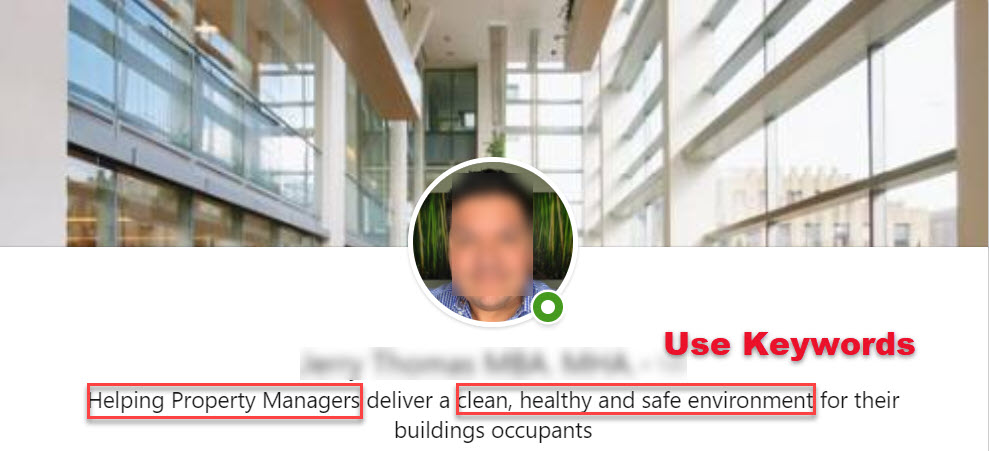
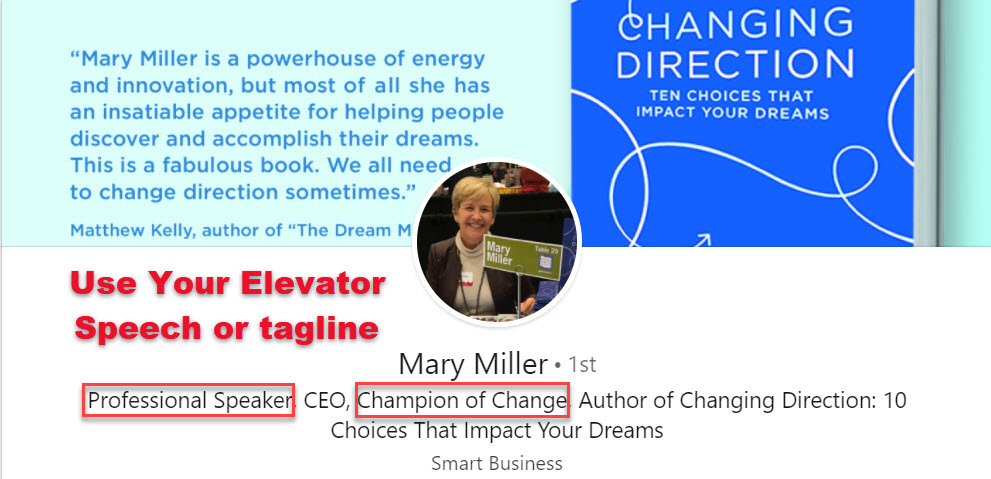
Also, think outside the box when it comes to your headline. That's the line that appears with your name, photo, and location in search results. Most people use their job title, but there's a smarter approach. Instead, use your tagline or elevator pitch. Say what you do, for what type of client, and the benefit it provides. It's a simple change but it will help you stand out from everyone else in search results.
Finally, don't forget to pay close attention to the Summary section of your profile. If someone clicks on your name in search results, it's one of the first things they'll see. What you include there may determine whether a potential client contacts you or continues searching.
Clearly communicate your service offerings, with a focus on the benefits (not just the features). This should be about your client, not you. How do you help them solve their problem? Remember to work those targeted keywords into this section.
LinkedIn Tip #3: Share Valuable Content
If your LinkedIn account is basically a static, online resume, it's time to make changes. It's not enough to just keep your work history and education current. To really gain traction (and leads) from LinkedIn, you need to be active on the site.
How? Sharing content is the best way to show up in your connections' feeds and to establish yourself as a trusted expert in your industry.
One way to do that is by regularly posting status updates. This doesn't have to be time-consuming; just one or two a day is great. Plus, you can use Hootsuite (or another social media scheduling tool) for free to schedule an entire month's worth of these in advance.
Another way to share content is by publishing articles using LinkedIn's microblogging platform, Pulse. Just click on “write an article” and the form will pop up.
This is your chance to show off your expertise; share information that's helpful to your prospects. Teach them things like why they need to hire a BSC, how to choose a qualified BSC, how a BSC can save them money, etc. This helps create trust. Sharing content on a regular basis also tells LinkedIn you're active on the site, which is one way its algorithm determines who shows up in search results.
By sharing content on a regular basis, your views, likes, and followers will gradually increase. That will also begin to boost your connection requests and opportunities to reach new prospects.
LinkedIn Tip #4: Make More Connections
Not having much luck with LinkedIn? One reason may be a lack of connections. The more connections you'll have, the more you'll show up in search results and in users' feeds. So, make it a priority to connect on LinkedIn with every person you meet in person or online.
You can also use the advanced search function to find prospects with whom you'd like to connect. This feature allows for highly targeted searches, using things like keyword, job title, company, location, even by shared interests like alma mater or charitable activity. As you find good leads, connect with them if you're allowed, or find shared connections to ask for a referral.
A word of warning: LinkedIn limits how many searches a non-paying user can make before blocking search access. If you'll be using this feature a lot, you'll need to upgrade to a Premium Business account.
You can also join groups on LinkedIn and use your participation there to find new connections. There are more than 2 million groups on the site, and you can join up to 100 (find groups under the “Interests” tab at the top of your LinkedIn page). It's good to be in a mix of groups for both your peers and your ideal clients.
Don't just join and them spam the membership. Participate by asking questions or sharing resources. After you've been active for a while, start connecting with the other members and start conversations with them.
LinkedIn Tip #5: Start Conversations
It may be tempting to immediately send information about your business to your new connections, but doing so is a mistake. Instead, focus on your “know, like, and trust factor.” Instead of pushing for a sale, first get to know the other person.
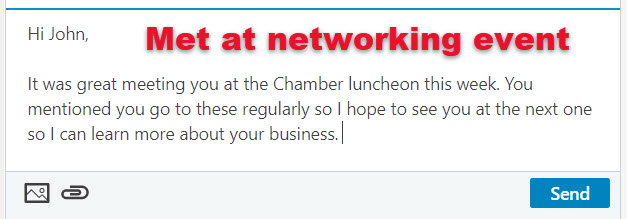
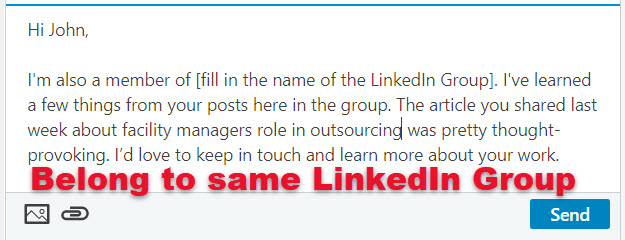
Look over the prospect's profile and find a shared connection or something of interest. Mention this as an ice breaker and ask about them and their business. People love to talk about themselves, so they will likely reply. Plus, using this approach increases the chances they'll reciprocate and ask about you. That creates an open invitation to talk about your offering rather than broaching the subject without a request.
Don't use LinkedIn hoping for quick sales. It's about establishing your brand, finding prospects, and creating relationships. Once you've started conversations there, however, your goal is to move those talks offline.
Once you've established rapport with a prospect, ask them for a call or in-person meeting. If you've been personable, helpful, and providing value up to this point, the buyer will likely trust you enough to agree to the next step.
Social selling is the future. If you're not using LinkedIn for prospecting, you could be missing out on a great way to grow your pipeline. LinkedIn won't make sales for you, but it can give you a competitive advantage.
Copyright The Janitorial Store. All Rights Reserved

Member Webinar: 5 Steps to Make LinkedIn Work for You
Ready to improve your Linkedln Profile?
In this recorded webinar, LinkedIn expert, Sandy Zeiszler shares 5 Key Steps to make LinkedIn work for you.
You'll walk away knowing how to use LinkedIn to:
- Showcase your unique skills and all you have to offer
- Grow your visibility and get found online
- Effectively build connections that lead to new business
Visit our Store for Certification Training Programs





