


How to Start a Cleaning Business - Part 5 -Guide to Creating a Business Plan
Guide to Creating a Business Plan
It is a common fact that many small businesses fail. Get your business off on the right foot by creating a business plan. A business plan is a document that helps you to identify your business and the specific products and services that you are going to offer to your clients. In addition, a business plan makes you think through all of the legal and financial aspects of your business.
The following information should be covered in your business plan:
1. COVER SHEET: Serves as the title page of your business plan.
- Name, address, and phone number of the company.
- Name, title, address, phone number of owners/corporate officers.
- Month and year your plan was prepared.
- Name of preparer.
- Copy number of the plan.
2. TABLE OF CONTENTS - Quick reference to your plan
3. STATEMENT OF PURPOSE: This states the business plan objectives. Make sure your statement includes the activity in which you will be engaged as well as who your customers are. Answer the who, what, where, when, why, how, and how much to summarize the following:
- Your Company (who, what, where, when).
- Who your management is and What their strengths are.
- What your objectives are and Why you will be successful.
- If you need a financing, why you need it, how much you need and how you intend to repay the loan or benefit the investor.
Note: You may not want to write the statement of purpose until you have completed your business plan. It is a summary and reflects the contents of the finished plan.
4. DESCRIPTION OF THE BUSINESS: In two or three paragraphs give a broad overview of the nature of your business, telling when and why the company was formed. Complete the summary by briefly addressing:
- What kind of business am I In?
- Where is my business located?
- What products and/or services do I sell?
- Why will the business be successful?
- What is the history of the business and/or experience of the owner?
- What are the unique features your business has to offer potential clients?
- Include your timetable - when the business will open and if you are currently in a full-time or part-time job, how you will transition over to your new business.
5. PRODUCTS AND SERVICES: List the specific services you will provide and/or the products you will sell. In addition, list the following information:
- Hours of operation.
- If the business is seasonal or operates year-round.
- Fees you charge.
- If and when contracts will be used.
- How clients will be billed/invoiced.
- Employee training.
6. LEGAL STRUCTURE
- Describe your company's legal structure and why it is advantageous for your company.
- List owners and/or corporate officers of the company.
7. BUSINESS MANAGEMENT
- List the people who are (or will be) running the business.
- Describe their responsibilities and abilities.
- List specific managerial strengths/qualifications of the people who will be running the business.
- If you are bringing in associates or consultants to assist with the management of the company, list how they will be selected and how they will benefit the business.
- If you are using an advisory team to help guide the business, list the members of the team and how you will stay in contact with them.
- Project salaries/consultant fees, etc. and list in supporting documentation.
8. EMPLOYEES/SUPPORT PERSONNEL
- What type of positions do you need to fill and with how many employees?
- What are the necessary qualifications?
- How many hours will they work and at what wage?
- Project future needs for adding employees.
9. INSURANCE
- What type of insurance(s) is your business required to carry?
- What is the cost of your insurance (costs can be included in supporting documentation.)
10. SECURITY
- Address any specific security issues your business needs to address.
11. MARKETING
- A brief overview of your marketing plan. The marketing plan should define all components of your marketing strategy.
- Particular points to address in your business plan should include:
o Initial target audience
o Marketing techniques to be used, i.e. advertisements, direct mail, flyers, present business contacts, etc. - Address what types of competition your business faces.
- Address the specific trends that are prevalent in your area, number of new business in the area, population growth, etc.
- A part of your marketing can address the customer service activities that will keep your clients pleased so that they will recommend your services to others.
12. TIMETABLE AND PROJECTIONS
Include a brief listing of the activities you will undertake to begin the marketing of your business.
13. FINANCIAL DOCUMENTS
This is the quantitative part of your plan. Financial documents are the records used to show past, current, and projected finances. Begin by showing the anticipated projections (income and expenses) for the first year. It is also helpful to calculate out projects for the 3rd and 5th year expectations.
Expenses to include in your Project Expenses & Income include:
- Equipment
- Supplies
- Furniture
- Advertising
- Telephone Expenses
- Insurance
- Memberships & Dues
- Professional Fees - Legal, Financial, Computer Consultant
- Rent/Lease of Building Space
- Vehicle Expenses
- Office Supplies
- Postage
- Printing
- Utilities
- Credit Card Fees
- Employee Salaries & Benefits
- Professional Development/On-Going Training
- Depreciation
- License Fees/Permits
Sources of income:
- Routine Office Cleaning
- Special Services Provided
- Investment by Owner
- Loan
CASH FLOW STATEMENT
From the above information you can prepare a cash flow statement. This document projects what your Business Plan means in terms of dollars. It shows cash inflow and outflow over a period of time and is used for internal planning. Cash flow statements show how much and when cash must flow in and out of your business.
PROJECTED BALANCE SHEET
This will show your Projection of Assets, Liabilities, and Net Worth of your company at end of next fiscal year.
14. SUPPORTING DOCUMENTS
Additional documents to attach to your business plan provide support to the main part of your business plan. Typical documents to attach include:
- Resumes of owner and key personnel
- Letters of reference
- Sample contacts
- Legal documents that pertain to your business' structure, insurance coverage, tax id number, partnership agreements.
- Copy of your marketing plan
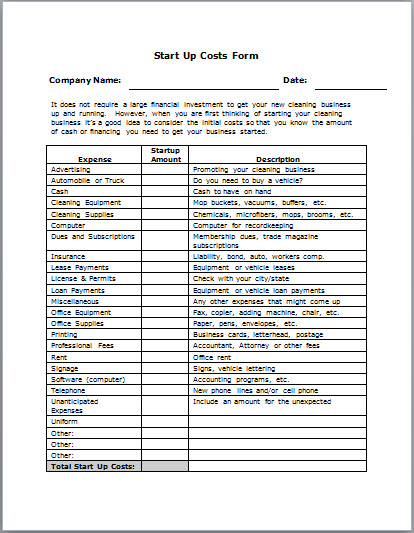
Start Up Costs
Members: Download the Start Up Costs Form
When you are just starting up your cleaning business it is important to sit down and figure out what your startup costs will be. This form breaks down the startup expenses into categories and explains the various items that belong in each category.
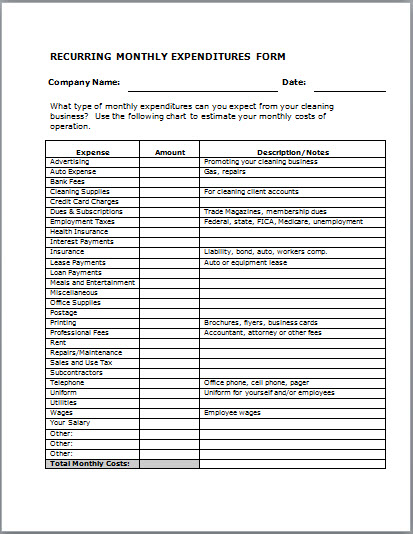
Recurring Monthly Expenditures
Members: Download the Recurring Monthly Expenditures form
Even after your cleaning company is up and running you will have an assortment of expenses to keep your business operating. This form will help you to see what types of expenses you should budget for on a continual basis. It includes items such as insurance, phone, office supplies, rental fees, etc.
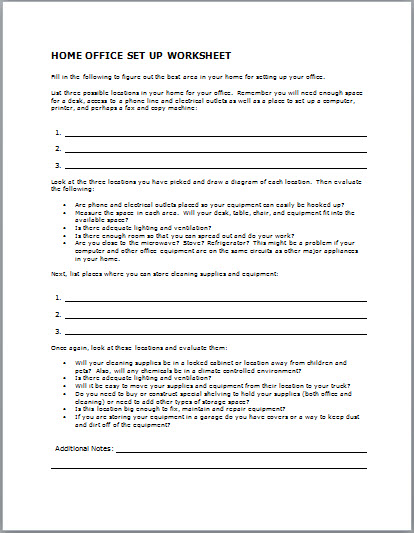
Home Office Set Up
Members: download the Home Office Set Up form
Are you going to going to be running your cleaning business out of your home? If so you need to think carefully about the space that you are planning for your office. This form will walk you through the steps you need to think about before deciding on the best location for your home office. It points out the factors you need to take into consideration - such as where the phone lines and electrical outlets are, lighting and ventilation, and do you have room to spread out and do your work? It also helps you look at how and where you will be storing office and cleaning supplies and equipment.
Congratulations! You now have the road map set up for your new business and you are one step closer to fulfilling your dream. It was the sensible thing for you to do. Now that you have your plan in place; Always! Always! Follow it and stick to it. Look back on it from time to time to see if you are following it and continue to press forward. You can never go wrong by having something you do not need than needing something you do not have. Start a back alley business and it will fall in the gutter quickly. Always be professional and go the extra mile!
In the next part of our series, we will cover Sales and Marketing for your Cleaning Business. Topics will include:
- Niches for your cleaning business
- Why you need to brand your company
- Writing a press release
- Networking tips
- Finding sales leads
- Cold calling success
- Closing the sale
How to Start a Cleaning Business - Part 6 - Creating a Business Plan
Copyright TheJanitorialStore.com. All Rights Reserved
Jean Hanson helps owners of commercial cleaning companies build a more profitable and successful cleaning business through her online community at TheJanitorialStore.com. Jean is also the host of the popular Web TV show CleaningBiz.tv and author of the newsletter Trash Talk - sign up today!
 twitter
 Facebook
 YouTube
 Instagram




