

Preventing Back Injuries for Janitorial Workers

There is one call you can receive from an employee that will send a shiver down your spine perhaps more than any other: "I got hurt." The implications to this call can be HUGE. Of course, you are concerned about the immediate well-being of your employee. No reasonable person wants to see another person in pain. Cuts, sprains and other minor injuries are common and easily treated. But slip/fall accidents and back injuries can require treatment and rehabilitation, resulting in higher Workers' Comp rates.
Proper care and safety measures will help to prevent back injuries among janitorial workers
Twenty-five percent of all Workers' Compensation claims involve some sort of back injury. If you've ever had one, you know how painful and debilitating it can be. Unfortunately, they can become chronic and last for weeks, months, or even years. If you have a worker with a back injury, he or she may only be able to do part of the job, or may not be able to do the job at all. You will have to deal with finding someone to fill in or temporarily replace the injured worker.
Often when an employee returns to work, they are given "light duty" restrictions based on doctor's orders. These restrictions typically involve no lifting over a certain weight, no bending, no rising of arms above the head, and so on. This doesn't give a typical cleaner much they can do. Now you need to find suitable work for them in addition to finding a way to get their normal duties completed on time.
In an industry known for slim profit margins, it's important to keep costs to a minimum. Many accidents are simply that - accidents. However, back injuries are often preventable. Considering the devastating effects they can have on the employee and the company, it makes sense to do whatever you can to prevent them. Improper lifting, bending, twisting, and excessive weight are common causes of back injury.
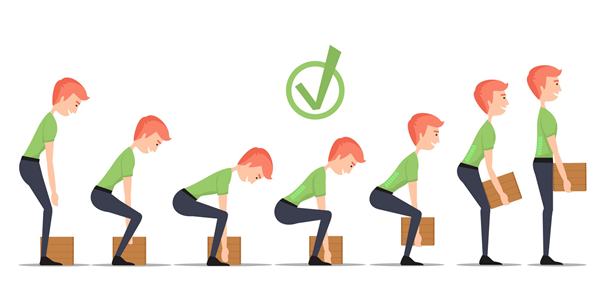
As part of your initial and ongoing training programs, you need to inform and follow-up with each employee about injury prevention. Using proper lifting techniques is one concrete way to prevent back injuries. Include some version of the following procedures in your training literature, and take the time to physically show every employee the proper way to lift.
6 Steps to help prevent back injuries when lifting objects
- Take a balanced stance with your feet about shoulder-width apart. One foot can be behind the object and the other foot next to it.
- Squat down to lift the object. Make sure to keep your heels off the floor. Get as close to the object as you can. (This is the time many people are tempted to bend their back.)
- Use the palm of your hands, not just your fingertips, to get a secure grip on the object.
- Lift gradually and smoothly (don't jerk yourself up) using your leg, abdominal and buttocks muscles. Keep the load as close to you as possible. Keep your chin tucked in. This will help you to keep a relatively straight back and neckline.
- Once you are in a standing position, change directions by pointing your feet in the direction you want to go and then turning your whole body. Avoid twisting at the waist while carrying objects.
- When you are ready to put the object down, use these same guidelines in reverse.
Other important tips to remember:
- If it is a heavy load, reduce the amount of weight by making several trips.
- Remember to look around before you lift and make sure you have a clear path to carry the object - you don't want to be twisting and turning around obstacles.
- Avoid walking on slippery and uneven surfaces while carrying objects.
- Test the load before you lift them by pushing them lightly with your hand or foot. This will give you an idea of how heavy the object really is. A small size does not mean that an object is light. Make sure the object is balanced properly.
- Use handles and lifting straps where appropriate.
- If you are wearing gloves when picking up an object, make sure they are textured gloves and not smooth.
- Don't throw trash bags from any distance. Walk up to the dumpster and place them inside.
- Remember to always do the work with your arms and legs - not your back.
- If the object is too heavy - get help.
- Look for and buy ergonomic equipment to protect the body from injuries. Manufacturers are creating ergonomic vacuums, mops and equipment, so watch for these features when buying new equipment and train your employees on their proper use.
This last tip points out another potential risk for back injuries. Improper vacuuming and mopping can cause back injury, or at the least, back pain. These actions often result in the twisting of the torso, causing a strain on the muscles supporting the back. Combined with simultaneously bending over and lifting, this can cause significant back pain. To avoid this, good posture is important. Keep your back straight, and use your arms to perform the necessary motions to perform these duties. Avoid twisting your torso, and keep bending to a minimum.
As mentioned, using ergonomic equipment and supplies will help prevent back pain. For example, a properly fitting backpack vacuum should have a properly fitting harness, displacing its weight to the hips rather than the back. Mop handles, vacuums, and attachments need to be of sufficient length so the user does not need to bend over. Microfiber mops are lighter and ergonomically designed so that the back can remain straight while using them. Traditional wringers are being replaced my models requiring less bending and less force to use. Using the right tool for the job, in conjunction with proper training, can avoid the strain on the back commonly associated with traditional cleaning techniques.
Training is not a one-time event. You must always be reminding employees to think about safety in everything they do. When you notice improper lifting techniques, kindly point them out. Oftentimes, people do things without even being aware of them. We learn through repetition, so train your managers and supervisors as well to be mindful of all your safety measures, including back injury prevention. You cannot afford to do otherwise.
For in-depth Back Safety Training that is done for you, check out the videos available at Clean Smart University!
Certified Safety Training for Janitorial Employees
Janitorial safety training must be a priority in your cleaning business. Not only is it your responsibility to keep your employees safe, but paying added Worker's Compensation fees due to your own lack of training just does not make good business sense.
Buy the Training Program and learn how to use it to get Certified!
Visit our Store for Certification Training Programs





