

Are All-Natural Cleaning Products All They're Cracked Up to Be?

It sounds great to say that you use only all-natural cleaning products. You may even feel a little jolt of pride for being such a responsible citizen of the world. However, there is no actual regulated definition or industry standard to be met before manufacturers can call something all-natural. You may have the best of intentions, but all-natural can be a meaningless term.
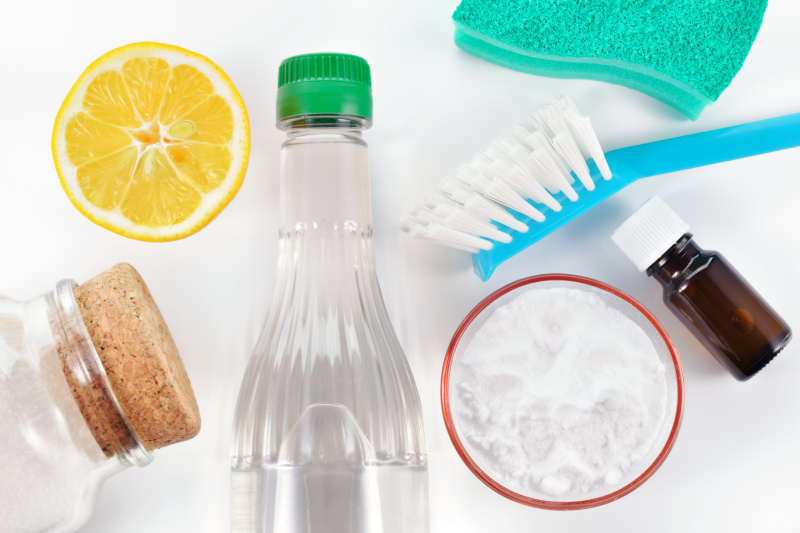
Another issue about so-called natural cleaners is the fact that natural doesn't always mean good. Just because something is natural doesn't make it safe; plenty of toxic ingredients are found in nature. (You wouldn't feel comfortable munching on strange berries or unfamiliar mushrooms, would you?) And the opposite is true as well; just because something is concocted in a lab doesn't automatically make it unsafe.
Often, companies take advantage of people's desire to use products that are not only safe for humans but also safe for the environment. Many terms are used on products to give this impression, such as:
- Natural
- All-natural
- Non-toxic
- Plant-based
- Naturally derived
- Green
- Biodegradable
- Eco-friendly
- Recyclable
- Environmentally friendly
Not all of those terms are regulated, so you will need to do your research before making value-based decisions about the products your commercial cleaning company will use.
The non-profit Environmental Working Group (EWG) reports that only 7% of cleaning products adequately disclose their contents on their labels. After an extensive study of over 2,000 products, which they checked against toxicity databases and other scientific studies, they also found that 53% of cleaning products contain ingredients that could potentially harm lungs. The EWG particularly warns against such common cleaning ingredients as:
- Formaldehyde
- 1-4 dioxane
- Chloroform
- Quaternary ammonium compounds like benzalkonium chloride
- Sodium borate (also called borax or boric acid)
- Phthalates (there are more of these in some “green” products than conventional cleaners)
- Phosphates
- Volatile organic compounds (VOC)
However, they also go out of their way to warn that even some plant-based, or natural products, can cause allergies. Conventional cleaners can sometimes have higher safety level rankings than those that are supposedly green or natural. For instance, many so-called green cleaners have just as many VOCs (which can cause a variety of health problems) as conventional cleaners do.
Greenwashing
Because it is well known that a majority (64%) of consumers wish to use products that are natural or environmentally friendly, many cleaning products are marketed to appear more environmentally friendly than they actually are. This is a practice called greenwashing.
The FTC has a set of government Green Guides that is periodically updated and that delineates deceptive practices that some companies use to mislead consumers. For example, Section § 260.3 includes provisos such as:
- To prevent deceptive claims, qualifications and disclosures should be clear, prominent, and understandable.
- Unless it is clear from the context, an environmental marketing claim should specify whether it refers to the product, the product's packaging, a service, or just to a portion of the product, package, or service.
- An environmental marketing claim should not overstate, directly or by implication, an environmental attribute or benefit.
- Comparative environmental marketing claims should be clear to avoid consumer confusion about the comparison. Marketers should have substantiation for the comparison.
What can you do?
- To avoid companies that are deliberately greenwashing, you need to be on your toes. Take nothing for granted.
- Remember that certain terms, like natural and eco-friendly are not regulated and should be thoroughly checked.
- A logo with an image of a tree or a happy forest animal does not signify anything; it is simply trying to create an impression in your mind.
- A company may advertise that their product has “fewer chemicals.” Your question should be, “Fewer than what?” Any nebulous claims should be investigated, or taken with a grain of salt.
- Product packaging may proclaim that the product is “Free of (fill in the blank)!” That is another empty term. That particular component may never have been in the product in the first place. Being without it means nothing special. (This is like when products like popcorn or potato chips advertise themselves to be gluten-free when they never had gluten in them in the first place.)
- Check labels carefully. Look at sustainability pages on companies' websites.
- Look for third-party certifications.
Examples of Credible Third-Party Certifications:
- Green Seal: Green Seal is a non-profit company that rigorously identifies eco-friendly products. Green Seal is well respected in the industry and provides science-based environmental certification standards for green cleaning products. A checkmark from Green Seal means that the product meets health and environmental standards.
In addition, Green Seal certified products comply with the FTC's Green Guides.
- The United States Environmental Protection Agency (EPA) certifies products as being Safer Choice. This means that they contain ingredients that are “safer for human health and the environment.” It is also part of an EPA Pollution Prevention Program (P2) that aims to “reduce, eliminate, or prevent pollution at its source.”
Remember; just as you don't want to be misled by companies making false claims to you, your clients don't want to be misled by your exaggerations or false claims. Don't describe anything as natural unless you can substantiate it.
Copyright The Janitorial Store. All Rights Reserved

Green Cleaning Training Program
Everything You Need to Know About Providing Environmentally Friendly Cleaning Services
Visit our Store for Certification Training Programs





