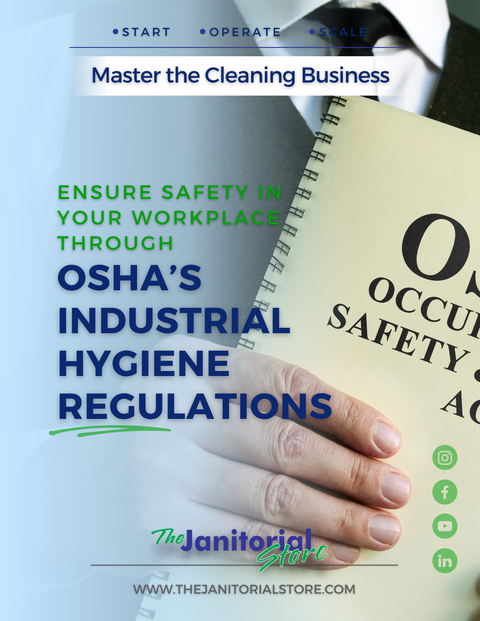
What are the five OSHA requirements relating to industrial hygiene?
As a commercial cleaning business owner, it is your responsibility to ensure the safety of your employees and clients. One of the primary ways to promote safety is by adhering to the occupational safety and health standards set by the Occupational Safety and Health Administration (OSHA). In this blog post, we'll discuss the five OSHA requirements relating to industrial hygiene that you need to be aware of to ensure that your commercial cleaning business is running safely and smoothly.
- Hazard assessment – The first and foremost requirement regarding industrial hygiene is to undertake a hazard assessment. As a business owner, you must assess the various tasks your employees perform and identify potential hazards of each task. Common examples of hazardous tasks include working with hazardous chemicals or exposed wires. You should then create a hazard control plan detailing steps to mitigate these risks. You should regularly review and update your hazard assessment process with the involved authorities.
- Personal protective equipment and respiratory protection – Employees working in hazardous environments such as cleaning and disinfection of hospitals, nursing homes, and schools are at risk of exposure to infectious diseases. OSHA's PPE standards require employers to provide appropriate personal protective equipment to their workers and train them on the correct usage and maintenance. Employers should also provide respirators to their employees if they are susceptible to airborne hazards, including infectious respiratory viruses of public health significance.
- Chemical management – OSHA has thoroughly regulated the use of hazardous chemicals in workplaces to prevent potential hazards such as fires, explosions, and the release of toxic fumes. You must ensure that your cleaning business handles hazardous chemicals and biological agents adequately. This includes proper labeling and storage, employee training, and having the appropriate equipment for chemical spill coverage.
- Noise exposure – Workplace noise can cause hearing loss, and OSHA has set exposure limits to protect employees. You should take measures to reduce noise exposure in the workplace, such as limiting exposure to hazardous noise, providing hearing protection, and posting warning signs in the high noise areas.
- Heat and cold stress – If your employees service outdoor areas, you should be vigilant about heat and cold exposure stress. OSHA provides specific guidelines on protecting workers from excessive heat or cold environments. Implementing measures such as risk assessment, hydration, limited exposure to high temperatures, and appropriate protective clothing and equipment is crucial.
Conclusion:
As a commercial cleaning business owner, following industrial hygiene requirements is a crucial aspect of your responsibility. By implementing and ensuring that your cleaning business follows the demonstrated OSHA guidelines, you can guarantee the safety of your employees and clients. Remember to assess workplace hazards, provide appropriate personal protective equipment, manage hazardous chemicals, control noise exposure, and protect against heat and cold stress. With a clean, safe and healthy workspace, your business will thrive, and help maintain a healthy and sustainable work environment for all.
Unlock the secrets to commercial cleaning business success!
The Janitorial Store is a private, members-only resource for those serious about how to START | OPERATE | SCALE a profitable cleaning business.
As veterans of the cleaning industry, we know that the business of cleaning can be incredibly challenging.
You can struggle or succeed. The decision is obvious... Join Today!