

What are the 4 types of chemical hazards?
As a commercial cleaning business owner, the safety of your employees and clients is a top priority. While cleaning chemicals can be highly effective, they can also pose serious risks if not handled properly. Chemical hazards can be present in many forms, such as flammable or reactive chemicals, corrosive substances, and toxic gases. In this blog post, we will discuss the four types of chemical hazards that every commercial cleaning business owner should know to promote a safer work environment.
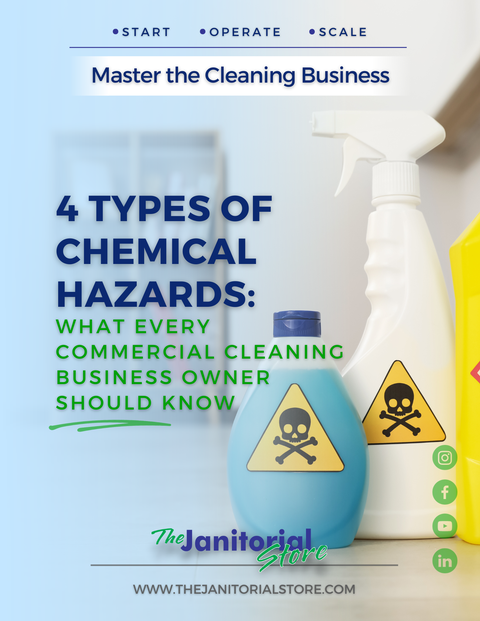
- Flammable and Combustible Chemicals: The first type of chemical hazard that we will discuss is flammable and combustible chemicals. These types of chemicals have the potential to ignite and cause fire or explosions. Common examples of flammable chemicals in cleaning products include alcohol, acetone, and petroleum-based solvents. To minimize risks, be sure to store these chemicals in well-ventilated areas away from heat sources, and always follow manufacturer's instructions for use. In addition, make sure that employees handling these types of chemicals are properly trained in their use and storage.
- Corrosive Chemicals: Corrosive chemicals are substances that can cause physical damage to skin, eyes, and mucous membranes upon contact. Common examples of corrosive chemicals used in cleaning products include acids and alkaline materials. To prevent exposure, make sure employees wear protective clothing and gloves when handling these chemicals and have access to an emergency eyewash station in case of accidental contact. Labeling all containers with clear warnings and keeping them out of reach of children is also crucial.
- Toxic Chemicals: Toxic chemicals are substances that can cause harm or death when ingested, inhaled, or absorbed through the skin. Common examples of toxic chemicals in cleaning products include pesticides and strong disinfectants. Employers should ensure that workers are properly trained in the use of these chemicals and equipped with sufficient personal protective equipment (PPE). Additionally, they should always follow guidelines for proper handling, usage, and storage of these chemicals, and be sure to dispose of them safely to avoid any contaminating effects on both the people and environment.
- Reactive Chemicals: Reactive chemicals are substances that can produce hazardous reactions when they come into contact with other substances, such as air, water, or other chemicals. These types of chemicals can cause heat, fire, or toxic gases like chlorine gas when improperly mixed. To prevent accidents, always store reactive chemicals in separate locations and labeled them properly with clear warnings. Train your employees to follow guidelines for proper handling, usage, and storage of these chemicals and to avoid mixing any chemicals that they are uncertain about.
Conclusion: As a commercial cleaning business owner, it's your responsibility to ensure your employees and clients are safe and free of chemical hazards. By knowing the four types of chemical hazards and taking the necessary precautions, you can efficiently prevent accidents and avoid serious consequences. It's important to properly train your employees in the handling, storage, and usage of chemicals, and ensure that they have access to sufficient PPE and equipment to keep them safe. Lastly, always read the labels on chemical products to understand their potential risks, and follow them cautiously. Proactive measures will make your work environment and business successful while keeping people safe.
Unlock the secrets to commercial cleaning business success!
The Janitorial Store is a private, members-only resource for those serious about how to START | OPERATE | SCALE a profitable cleaning business.
As veterans of the cleaning industry, we know that the business of cleaning can be incredibly challenging.
You can struggle or succeed. The decision is obvious... Join Today!




