

Tips for Training Cleaning Staff

The more you invest in training for your employee's, the more profit you will make. A report put out by HR Magazine, states that businesses investing $1,500 or more per employee per year on training average 24 percent higher profit margins than businesses that invest less. Many small businesses cannot afford to spend $1500 per employee, but investing what you can for training is definitely money well spent.
We have found that effective and comprehensive training leads to cleaner buildings, fewer accidents, faster cleaning times, improved employee retention, and a more professional cleaning staff. And training should not end after orientation or the employees' probation period. Training should be an ongoing process and employees should have present and future goals. Employee goals should be clearly defined within your business and equate to the goals of your business itself.
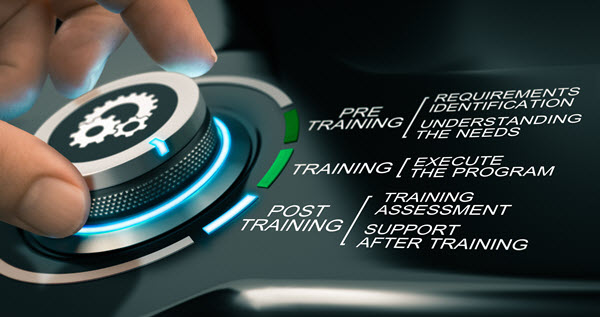
Essentials to training the cleaning staff
Keeping the following tips in mind will help to make sure your employees learn to do their job safely and efficiently throughout their tenure with your cleaning business:
-
Cleaning/janitorial workers are the fifth most injured workers in the entire country. Training your cleaning staff correctly will keep them safely on the job and help also keep your insurance rates down.
-
Keep the training focused on the employee, their experience level and their current needs. Train them so they can successfully fulfill their job description and duties now. And continue to train them for the future.
-
Train the trainer. Owners, managers, and supervisors must first have a thorough understanding of the training process themselves and present the information with confidence and enthusiasm.
-
Training sessions are normally conducted in a room, with the instructor at the front and the employees seated at tables (this makes it easier for the instructor). Instead, try arranging chairs in circles so people can interact with one another.
-
When conducting training sessions, make eye contact, ask questions, allow for feedback and questions, and get them involved - don't just give a lecture.
-
Put a limit on training sessions, say an hour. Anything after that, your trainees will get bored, restless, and experience “information overload.” Thus decreasing the training effectiveness.
-
Measure the effectiveness of your training. It's hard to know if your training time was well spent if you do not have some sort of measurement tool. This can be improved production rates, fewer accidents and damage claims, or reduced consumption of cleaning products and supplies.
-
Make sure that your training is effective. Don't just give employees training manuals or product literature and expect them to read it and Voila, improved job performance and thorough understandings. Demonstrate the products they will be using as well as the proper cleaning techniques. Encourage your employees to ask questions if they don't understand something.
-
Find ways to make both their job and training interesting. Demonstrate new industry equipment and products. Get them interested in the cleaning industry. Use your knowledge and experience and pass that along to your cleaning staff.
-
Remember, you can learn from your employees. If they have picked up a technique that saves times, money, or makes the job easier, ask them to share it with the rest of the cleaning team.
-
Change is not always easy but training can be. People tend to like consistency and surprisingly enough, repetition. The training may involve a new cleaning product or piece of equipment and employees' may be resistant to the change. Be prepared for this resistance and overcome it with information and statistics about why the change is needed.
Here is a simple yet effective technique for training I have used with much success:
Tell - Show - Do - Review
- Tell (about each step)
- Show (how to perform each step)
- Do (each step)
- Review (each step)
The proper training of your cleaning staff is essential to get the job done safely, correctly and efficiently. Ongoing training creates new opportunities for employees and helps with retention. Keep your employees interested during training sessions by making the training hands-on, informative and fun. A properly trained staff will lead to quality cleaned buildings, customer referrals, and higher profits for your commercial cleaning business.
Copyright The Janitorial Store. All Rights Reserved
 |
Is your commercial cleaning company and cleaning staff in need of effective and comprehensive training processes and programs? The Janitorial Store has everything your company needs to create the ultimate cleaning machine. |
Visit our Store for Certification Training Programs





