

Choosing a Floor Burnisher for Your Cleaning Company

Floor care can eat up a big percentage of time spent on a cleaning contract. Having the right floor-care equipment will reduce your workload and, in turn, boost profits. Burnishing a hard floor delivers a 65% reduction in labor costs over buffing, making the burnisher one of the most important items in a contract cleaners' toolkit.
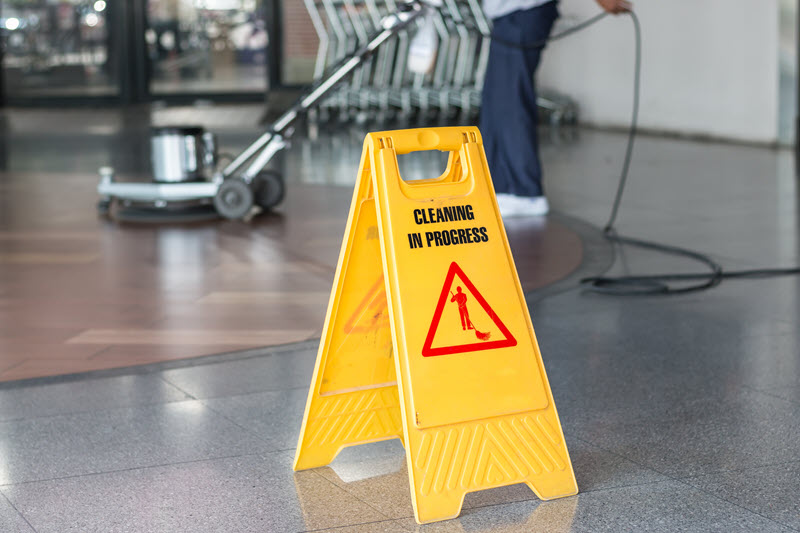
Burnishers are used to restore a floor's shine. They spin at about 1,000-3,000 RPMs, and this high-speed rotation creates friction to produce a “wet-look” that many facilities desire for their hard floors.
If you're in the market for a burnisher, there are many factors you'll want to consider before making a purchase. Shopping for this key equipment can feel overwhelming, but rest assured because we'll walk you through the process.
When choosing a floor burnisher, ask yourself these questions:
1. How much am I willing to spend?
On average, a corded electric machine is the least expensive option, averaging about $900. Propane machines average around $3,000 per unit, and battery comes have the highest price tag at an average of $3,800.
A propane machine can tackle about 5,000 square feet in 30 minutes. A battery-powered machine will take about 45 minutes, and a corded machine just under an hour to cover the same area.
Each BSC should do the math to calculate the return on investment for the various machines. Depending on the average size of your clients' buildings, a faster and more expensive machine could quickly pay for itself in labor savings. For example, if you have many large retail clients, a propane machine may be worth the investment.
In many cases, however, BSCs find that the potential labor savings aren't impressive enough to outweigh the downsides of propane, particularly the maintenance required. This is especially true for BSCs whose clientele includes mostly office buildings.
2. How important is maneuverability?
Burnishers are available in everything from 13- to 27-inch models (the largest sizes are typically limited to propane powered machines). The 20-inch is most popular.
Think through your job sites. Will a mid-size machine work everywhere? Do you need a smaller machine to maneuver around tight areas? Do your clients have wide-open expanses of floor that can be covered dramatically faster with a large machine? Can you financially justify having both a small and a large burnisher?
Also, a quick note about speed: Although burnishers are available from 1,500 to 3,000 rpm, there's no discernible difference in gloss between those speeds and there's less than a 5 percent reduction in labor.
3. How much training and maintenance are involved?
Corded machines require very little training or maintenance. You need a good pad and then your techs can basically plug it in and go. That's a huge selling point for BSCs who must cope with the janitorial industry's high turnover rates.
Battery machines require battery charging with distilled water, and a 12-hour reclaim time between dead to fully charged.
Propane machines need a new liquid propane tank about every eight hours, at a cost of about $12 apiece, plus they require oil changes every 30 hours and new filters every 60 hours. They also require training to avoid potentially costly mistakes.
4. Do I need to easily transport the machine?
When you consider the benefits of battery-powered machinery, chief among them is likely freedom of movement. But in fact, very often battery-powered burnishers are the most difficult to transport due to their weight. They can also be difficult to maneuver on sidewalks and uneven surfaces.
If you plan to use the same burnisher in many client buildings, the best choice is likely to be a corded electric compact machine. This equipment can often fit in the trunk of a car and is specifically designed for BSCs who value ease of transport over speed and price.
5. How important is dust control?
A growing trend in burnishers is the built-in dust-control system. These devices claim to capture more than 90 percent of airborne particulate. They can also eliminate the need for dust mopping or vacuuming the floor after burnishing, which can reduce labor costs.
On the downside, the integrated dust-control feature forces technicians to stay an inch or more away from the wall. That's because it uses a wrap-around skirt that redirects the airflow from the pad through a filter.
While many medical facilities will demand dust-control devices, many clients don't care either way so long as your technicians mop or vacuum after burnishing.
Final Verdict
For most BSCs, corded electric burnishers provide the best balance of cost, portability, speed, and maintenance requirements. That's why they outsell battery and propane machines by a factor of ten.
Copyright The Janitorial Store. All Rights Reserved
Certified Safety Training for Janitorial Employees
Janitorial safety training must be a priority in your cleaning business. Not only is it your responsibility to keep your employees safe, but paying added Worker's Compensation fees due to your own lack of training just does not make good business sense.
Buy the Training Program and learn how to use it to get Certified!
Visit our Store for Certification Training Programs





