

Quality Assurance - Create Your System for Ensuring Cleaning Quality
To continue to grow over the long-term, a building service contractor must do more than focus on selling. It's great to land new clients, but maintaining the ones you already have is the real key to sustained success.
That's because a 5 percent increase in customer retention can increase a company's profitability. It costs more to acquire new clients than to keep the ones you already have, and loyal customers are far more likely to resign a contract, refer a peer, or try a new offering.
It's not enough to fly by the seat of your pants and hope clients like you enough to stick around.
You need to create a framework for managing quality. That means crafting a written quality assurance plan that:
- defines cleaning service requirements
- outlines how you'll measure performance
- includes a method for soliciting customer feedback and making continual improvements
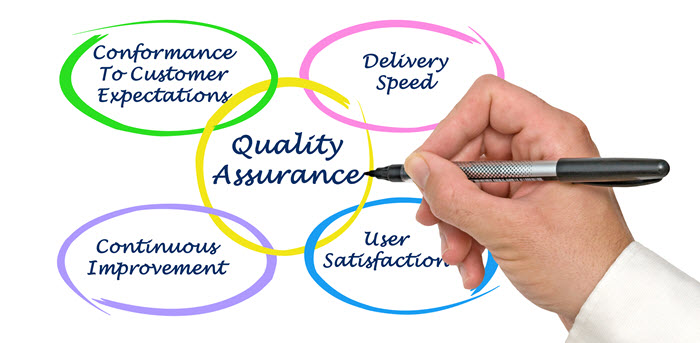
The most successful commercial cleaning companies have structured Quality Assurance (QA) programs.
In addition to improving customer satisfaction and retention, QA programs have other benefits.
- Allow BSCs to stop functioning in reactionary mode (putting out fires) and instead become proactive (anticipating fires before they start)
- Help BSCs make continual improvements to service delivery to become more efficient, which also improves cost effectiveness and the bottom line.
- Create a common vocabulary between BSCs, their employees, and their customers to strengthen communication and the overall relationships.
- Improve employee morale by providing comprehensive training, positive feedback, and constructive criticism, as well as helping cleaners understand how their work relates to customer satisfaction.
The only communication many cleaning companies have with their customers is when there is a problem or issue with their cleaning performance. A QA program opens up communication lines with the customer and shows your company's commitment to achieving and sustaining quality.
The Elements of a Quality Assurance Program
The most successful QA programs are more than inspection reports and disciplinary action, and include things like:
- Formal employee training
- Clearly defined outcome expectations and key performance indicators (ie: improved customer complaint ratio)
- Facility visits during business hours to check work quality and to discuss customer needs
- Inspection reports that verify the quality of their teams' work after a job is complete
- Regular (monthly/quarterly) customer input on the quality of services
- A system for using feedback to improve services
- A company point person for each customer and regular, responsive communication with clients (not just in the case of emergencies)
- A system for tracking customer requests to ensure timely completion
- Records for all inspections and client communications
Quality Assurance starts during training (learn about best practices in training here). Employees should understand exactly, down to each step, how to perform the tasks for which they are responsible. It's important to have set standards so all employees and managers are using the same metrics to evaluate results.
Having this level of detail from the start of an employee's tenure has an added benefit. Clearly outlining responsibilities reduces problems that can arise when there is a lack of accountability in an organization. When everyone knows exactly who should do what and how, there's far less opportunity for a “that's not my job” mentality that can lead to finger pointing and complaining.
The Importance of Inspections
Perhaps the most important element of a QA program is inspections, which can identify weaknesses in training, supervision, resources, or personnel. If you want your business to keep improving as it grows, continuous evaluation of your services is key. To really work, however, inspections must be well planned.
Cleaning inspections must begin with a baseline against which you can measure. It's the only way to know whether services are improving, declining, or staying the same. Think through exactly what you'll inspect and how you'll rate/weigh results.
Some metrics you may measure include complaints/repeats, on-time work order completion rates, safety reports, and total cost of services. You'll also want to assess the quality of cleaning in specific areas using a quality measurement scorecard. Here is a sample Building Site Inspection Checklist.
It's important to establish how often you'll conduct inspections (they must happen regularly to accurately assess results). Building inspections should be routine and are typically scheduled per contract agreement and are typically conducted on a weekly, monthly or quarterly schedule.
While visual inspections are most popular, you may also want to consider things like adenosine triphosphate (ATP) monitoring systems or Gloss Meters for more scientific measurements of hygiene.
Most cleaning companies assign inspections to the onsite supervisor or a designated person that is in charge of supervising the work being completed at the building. Be sure all inspectors are trained to assess results in the same way. Cleaning is somewhat subjective, so the goal is to eliminate deviations in measurements. Get clear about your baseline and expectations, and take time to get all of your inspectors on the same page.
If budget allows, it's helpful to use technology (like the mobile inspection apps from Cleantelligent or Swept) to collect and disseminate data to your team and customers. Reporting is a key element of QA, and it's best when it's highly customized to each client. Get to know how your customers like to receive information, and exactly which metrics they want to see. Bogging them down with too many details will only cause frustration.
Finally, inspections are only useful, of course, if they lead to positive changes. The results must be shared with team members. Management should mentor employees who require corrective actions, and positive feedback should be given whenever possible to keep team members motivated. Tying inspections to performance incentives can also be powerful.
Providing your customers with quality cleaning and meeting their cleaning needs and specifications is the foundation of any successful, customer-centered commercial cleaning company. Establishing a Quality Assurance program, which includes regular inspections, is the best way to ensure consistency and to create loyal customers.
Ebook Download: The Secret to Recruiting and Retaining Millennials
|
|
Millennials have overtaken Baby Boomers and Generation X as the largest share of the American workforce. More than a third of employees are 20 to 36 years old, and it will reach 50% in the next three years and 75% by 2025. If you're not hiring Millennials yet, download the ebook for best practices on recruiting and retaining this growing workforce. |

Visit our Store for Certification Training Programs





