

Training a Growing Team of Cleaning Technicians
Your commercial cleaning business is growing, and so is your team. Now comes the challenging part: Making sure your employees can effectively and efficiently deliver services that meet your quality standards. A well-planned training program is essential for both customer satisfaction and employee retention.
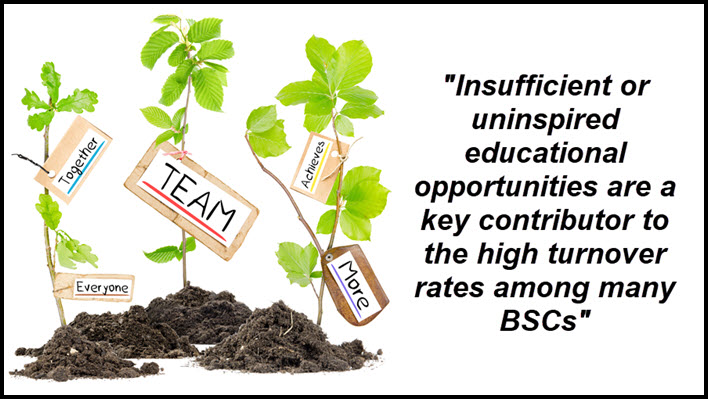
Unfortunately, many BSCs miss the mark when it comes to training their growing team of cleaning technicians. Insufficient or uninspired educational opportunities are commonplace in the cleaning industry, and are a key contributor to the high turnover rates among many BSCs.
To ensure consistent quality, maximum productivity, and loyal employees as your company grows, your training program should include these 10 essential elements.
10 Essential Elements for Training a Growing Team
1. A clear leader
It's important to put one person in charge of training, whether that's you or someone on your management team who is highly experienced and qualified. Invest in ongoing professional development for your training leader. They should be informed about the latest and best practices for both custodial procedures and instructional methods. It's not enough to have a trainer who plays a video or lectures for an hour. They must understand how to deliver hands-on, discussion-based training.
2. Broad appeal
If you're using one-size-fits-all training, it's time to make changes. People process information differently, so it's important that your program is compatible with various learning styles—visual, aural, verbal, and physical. That means, whenever possible, incorporate readings, discussion, and demonstrations into every lesson.
3. Interactive lessons
One of the most effective ways to train employees is by showing them how to do something and then allowing them to practice it in a controlled environment. The trainer should demonstrate various tasks and then supervise trainees as they try (if someone makes a mistake, use that as a starting point for discussion). Most people learn best by doing, so this hands-on approach is crucial. In fact, hands-on training has a retention rate of 75 percent.
4. Real examples
While it's not wise to call out individual customers, it can be very helpful to use real-world situations during training. This helps employees better understand how what they are learning will eventually translate in the field. Also, find ways to make industry jargon more relatable to those who are new to the industry. For example, when explaining how to use a chemical dispensing system, you could explain how the automatic dilution with water is similar to weed control systems that attach to your garden hose.
5. A creative approach
Don't be afraid to have fun with the training process. With a younger generation of candidates joining the cleaning industry, it's important to find creative new ways to get them excited about training (sign up for the download below on hiring and retaining millennials). Consider creating a system where they unlock levels for each training they effectively complete. You can incorporate prizes for those who unlock levels the quickest. This will create some friendly competition and make the training process fun for everyone.
6. Plenty of answers
The training process may be overwhelming for new members of your janitorial team. There will be a lot to learn and process, and they may not understand enough to know what they need to know or should ask. Anticipate the questions employees are likely to eventually have, and answer them now. This will clear confusion and allow them to start working efficiently as soon as possible.
7. A focus on mission
A custodial team that understands its company's mission and values are more likely to take pride in their work and stay with the company longer. Training should go beyond tasks and responsibilities to also incorporate the company's culture, mission, and values. Help employees understand how their jobs align with the goals of your business.
8. Role models
Employees do what you do, not just what you say. It's important your management team holds itself to the same standard that you preach during training. Behave how you expect employees to behave and don't take shortcuts (that is, unless you're ok with them taking shortcuts too). While role modeling isn't a substitute for quality training, it should be used to reinforce what employees learn.
9. Honest feedback
Employees feel respected and valued when given an opportunity to provide feedback about their training and the instructor. Let them know it's okay to be honest; tell them their evaluations are the best way for you to grow as a leader and mentor. Use the information the employees provide about content and techniques to continually update and improve your program and training skills.
10. Ongoing education
Your team's professional development shouldn't stop after the official training period ends. Employees need consistent coaching, so always be on the lookout for opportunities to offer additional training that can enhance your team's skills. Also, people tend to forget some of what they learn as time passes. Revisit your various trainings on a regular basis, even with long-term employees, and find ways to keep the information fresh and fun.
Ebook Download: The Secret to Recruiting and Retaining Millennials
|
|
Millennials have overtaken Baby Boomers and Generation X as the largest share of the American workforce. More than a third of employees are 20 to 36 years old, and it will reach 50% in the next three years and 75% by 2025. If you're not hiring Millennials yet, download the ebook for best practices on recruiting and retaining this growing workforce. |

Visit our Store for Certification Training Programs





