

Tips & Tricks for Trashing

Indeed, trashing plays an important role in maintaining a high level appearance in an office building. One of the first things an employee or visitor to an office will notice is a full or overflowing trash can. As well as presenting an unsightly appearance, waste material that is allowed to accumulate may also become a safety issue.
Trashing is one of the most routine cleaning tasks for cleaning technicians, and although this may seem a very simple task, there are certain techniques and precautions that need to be observed.
Tips and Tricks for Trashing
- Full cans can become a fire hazard and overflowing materials are a common cause of accidents, such as falls. Waste baskets can also contain partially eaten sandwiches, half empty soda cans and other materials that can cause infection or foul odors. Prompt removal of waste material and cleaning of trash cans will help to eliminate these problems.
- For prompt and efficient trash removal, make sure you have the proper equipment: A brute, large sized liners (45 to 60 gallon) for the brute; medium (20 to 30 gallon) and small (10 to 15 gallon) liners for the trash cans to be emptied. Have cleaning cloths and disinfectant readily accessible to clean any trash cans that need it. Use a nylon brush, green scrub pad or dampened melamine sponge (Magic Eraser) for stubborn, stuck on waste material.
- Before beginning, make sure you know where to start and where to finish. The easiest and most effective trashing path should be chosen. It is generally best to proceed in a clockwise or counterclockwise direction and work your way around the room. Empty trash cans, electric pencil sharpeners, hole punches, etc. and pick up obvious waste on the floor around the trash can.
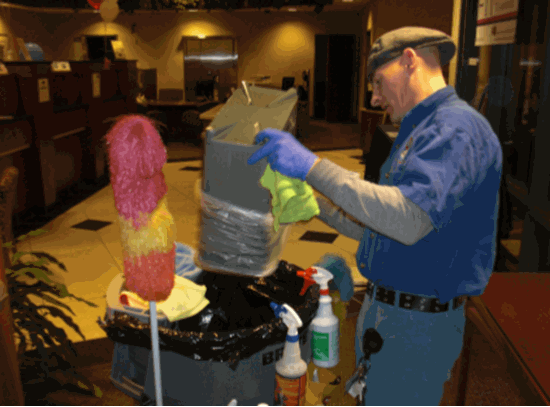
- Push the brute as close to the trash can as possible. This is also a time saver. You don't want cleaning technicians wasting time walking trash to the brute. To empty the can, turn it over and push it as far down inside the brute as possible. This will reduce flying dust, ashes or small bits of paper. Hold the can in one hand and dislodge any stuck papers by tapping on the side and/or bottom with your hand. Never compact trash with your hands or feet.
- Check the trash can for foul odors, food, or foreign material. If you see or smell food or foreign materials, change the can's liner. Place an extra liner in the bottom of the trash can, then put the fresh liner in the can and tie a knot in one end of the liner so it fits tightly over the can. Always return the can to its original location.
- Do not over fill the brute. Tie the liner with a knot when it is two-thirds full. Tip the brute on its side and pull the bag out (this will help to eliminate suction). Be sure to bend at your knees, not at your waist when lifting trash bags. Dispose of the filled liners in the provided dumpsters or set outside the door for later removal. If you must leave filled trash bags inside until they can be taken out to the dumpster, put them on a tarp or plastic to protect the flooring from leakage.
- If you suspect an item has been accidentally tossed into a trash can and not meant for removal, remove the item and leave a note asking if it is indeed trash. Any boxes in rooms or halls should not be removed unless they are marked as trash. It is always better to be safe than sorry!
Remember, there is almost nothing more unsightly than an overflowing trash can. Work safer and easier by follow these tips and tricks to make trashing more efficient and to maintain a high standard for your cleaning customers.
Copyright The Janitorial Store. All Rights Reserved

"Cleaning to Perfection" General Cleaning Training Program
Become a Certified Cleaning Technician Cleaning Certifications are important to your clients. If you want to win out over the competition, it's time to start training your cleaning technicians with the industry's leading Certification Training Programs.
Buy the Training Program and learn how to use it to get Certified!
Visit our Store for Certification Training Programs





